




#Amorepacific:log
2026.06.09
0 LIKE
16 VIEW
-
-
- 메일 공유
-
https://dev.stories.amorepacific.com/en/amorepacific-turn-adversity-into-advantage-authenticity-marketing-campaigns-brands-are-getting-right
Turn Adversity Into Advantage: Authenticity Marketing Campaigns Brands Are Getting Right
Digital Marketing Trends, Explained Simply #2
Editor's Note
Every morning, we wake up to a digital world that has changed overnight. Companies everywhere are experimenting with everything digital (content, commerce, customer experience, AI) and weaving it all into their marketing to create something truly special for their customers. Sometimes with curiosity, sometimes with a sharper eye: through this column, I’d like to explore the digital trends making headlines right now, examine them from multiple angles, and share some insights along the way.
#INTRO
What does your wind-down routine look like before bed? I dream of a digital detox, but every night I find myself scrolling through Reels and Shorts, navigating social media. Dopamine content is everywhere, designed to grab your attention, and before you know it, the hours have slipped away. Paradoxically, though, I rarely remember any of it by the time I fall asleep. With so many content creators and influencers producing content on a scale, it’s harder than ever to tell what’s a genuine experience and what isn’t. Today, I’d like to talk about some campaigns that stood out for their authenticity, including a few that took home awards at recent global advertising shows.
1. The Dove R/eal Reviews Campaign
Three stars? Four? Doesn’t matter.
When you browse product reviews on a shopping site, how do you go about it? Because most platforms are set up to surface the highest-rated reviews first, I always switch the filter from “recommended” to “most recent.”
From a brand’s perspective, it’s genuinely difficult to display unflattering customer feedback for everyone to see. And any marketer’s instinct, understandably, is to highlight only the best things about their product. Yet there’s a campaign that flipped this conventional approach entirely on its head, and it came from Dove, a brand that has long made authenticity its calling card. Earlier this year, Dove launched the ‘R/eal Reviews’ campaign to promote a hair mask, showing customers exactly what real people said, not a word edited out — and it made waves.
Dove turned to ‘Reddit’: a community known for the candor and scrutiny of its reviews. The product in question was Dove Intensive Repair 10-in-1 Serum Hair Mask. Dove invited Reddit users to try it and post their honest opinions, good, bad, and everything in between. They then announced that the first 50 Reddit reviews, with permission from each writer, would be used as-is in their advertising. Rather than curating the most flattering feedback, Dove committed to showing it all: the complaints, the disappointments, the unfiltered take.
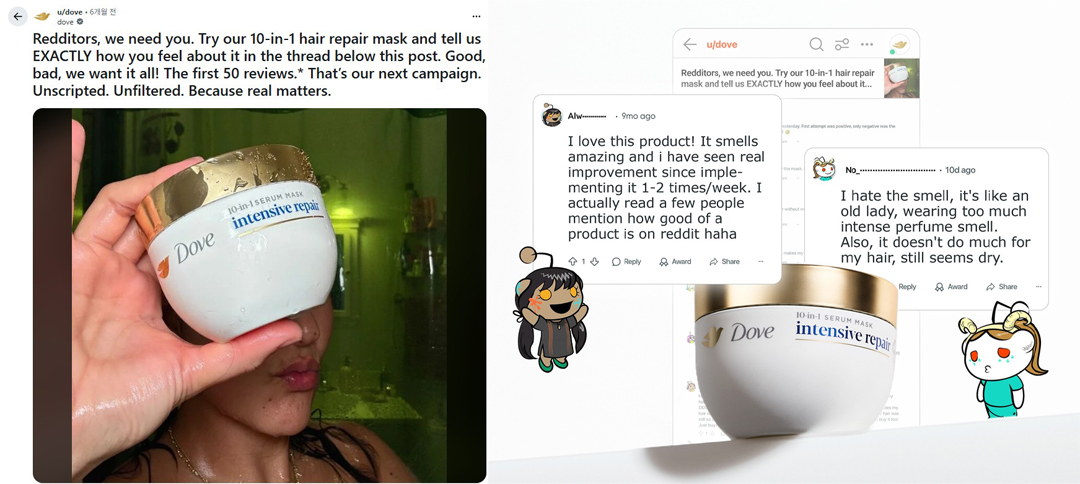
Dove’s review solicitation post on Reddit, Source: Reddit
Dove ad using Reddit reviews verbatim, Source: Dove
The 50 reviews that came in included comments like “the scent is overpowering,” “I’m not sure I notice any difference,” and “it actually makes my hair look drier.” Dove ran them all anyway, exactly as promised. The campaign copy read: “Their reviews. That’s our campaign. No edits.” This underscored that nothing had been touched.
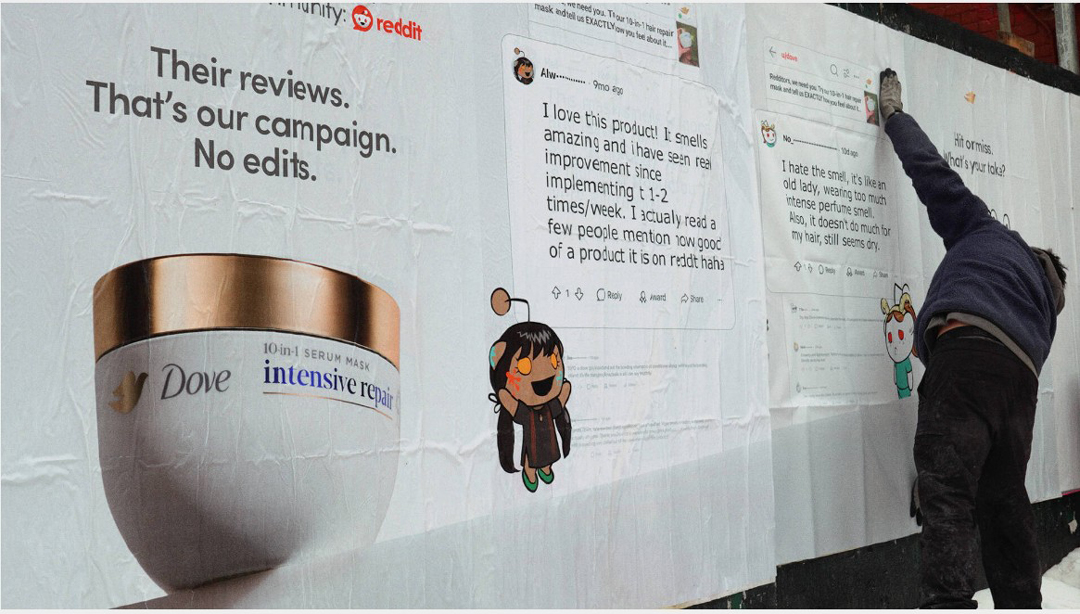
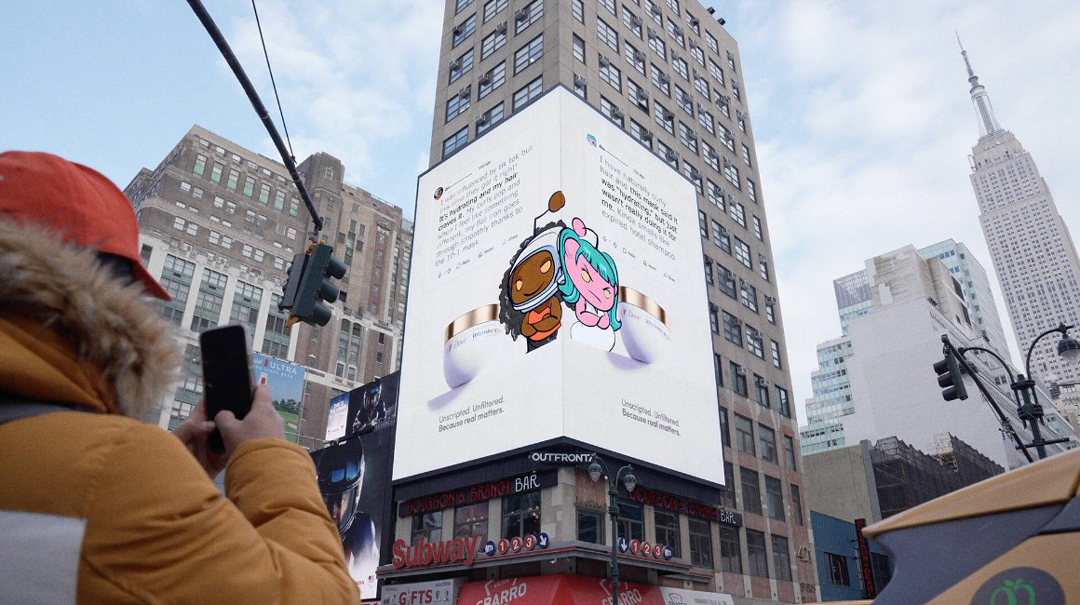
These reviews were shared with the public across outdoor advertising in the heart of New York, pop-up events, Dove’s social media channels, and owned media. Reactions ranged from “I bought it just because they left the comments section open — that was wild” to “Are they seriously showing all the comments unfiltered?” The campaign generated enormous buzz. It was a vivid example of how a brand’s openness, even toward customers who gave negative feedback, can translate directly into trust.
2. The Vaseline Verified Campaign
Millions of tips? We appreciate them, but we’ll only put our name on the real ones.
If Dove’s campaign made customers’ grievances into content, the ‘Vaseline Verified’ campaign went a step further, taking the full universe of tips and usage ideas circulating among users, including ones that weren’t even accurate, and turning them into source material. The idea: fact-check the claims people made about the product and award an official certification mark only to the tips that held up.
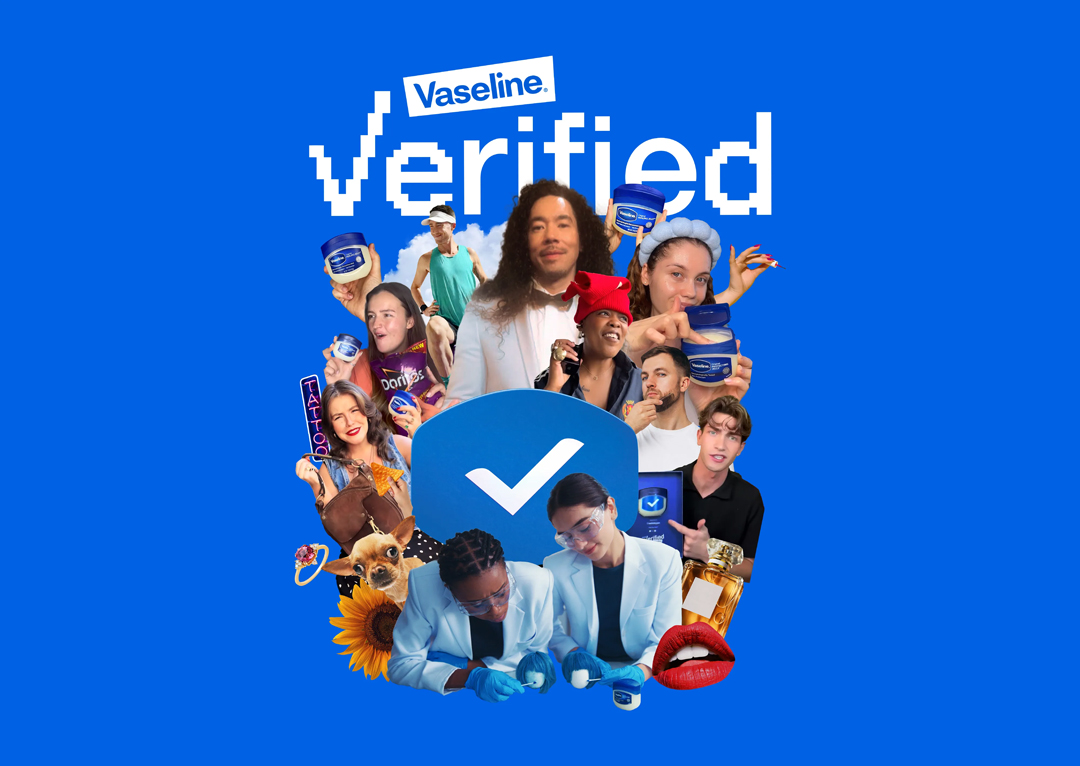
<‘Vaseline Verified,’ winner of multiple awards at the 2026 Clio Awards, Source: Clio Awards website>
Vaseline had already earned the nickname ‘Wonder Jelly,’ prized not just for skincare and moisturizing but as a go-to fix for all manner of everyday situations. As a result, an enormous variety of uses, well beyond the official instructions, had spread across social media. Many were genuinely useful, but mixed in were unsafe applications, exaggerated claims, and outright misinformation. As short-form video platforms like TikTok became mainstream, the problem only grew: tips suggesting people ingest Vaseline, or apply it to an eyelash curler before use, began circulating without any safety verification.
Unverified, user-generated information in the wild. Vaseline decided to lean into it. Rather than dismissing the millions of ‘Vaseline life hacks’ spreading across global social media as mere noise, the brand saw them as an opportunity for genuine interaction. The result was the ‘Vaseline Verified’ campaign: a systematic effort to test each tip and elevate only the ones that checked out.
Vaseline monitored product tips posted across TikTok, Instagram, and various online communities, selecting a wide range of ideas, from beauty hacks to everyday problem-solving, as candidates for verification. Unilever R&D scientists then ran the experiments directly. To test the claim that “Vaseline can remove waterproof makeup,” for example, they applied makeup to an arm, then used a cotton pad with Vaseline to wipe it off. Where the tip proved effective, Vaseline added a scientific explanation; in this case, that its oil-based composition is effective at dissolving oil-based products.
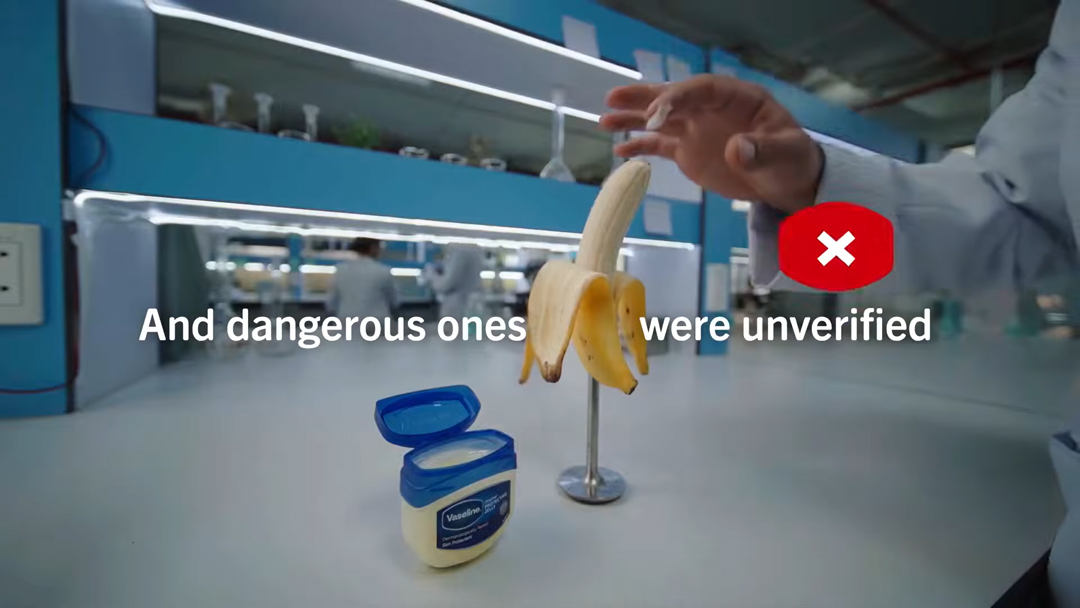
<Tips that could not be verified were marked ‘Not Supported.’ Source: YouTube channel ‘Amazing Ads,’ Vaseline campaign case study video>
Tips confirmed through testing received the official ‘Vaseline Verified’ certification mark. If the original tip came from a content creator, Vaseline even sent a physical trophy as a gift. The verification process itself became Vaseline’s advertising content, and the creators went on to drive sales on TikTok Shop and other channels, giving the campaign a commercial lift as well. ‘Vaseline Verified’ was recognized for its creativity in treating user-generated content as the subject of scientific inquiry, winning multiple awards at the 2026 Clio Awards: one of the three most prestigious global advertising shows.
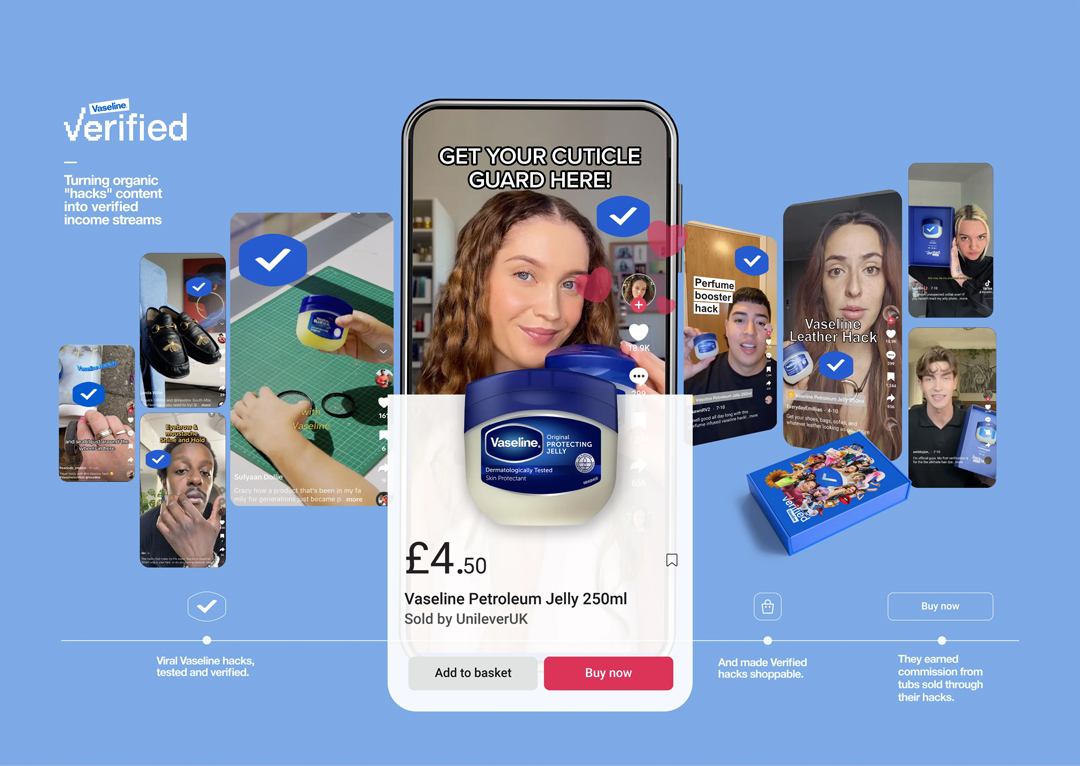
<Content from creators who received the certification mark, Source: Clio Awards website>
Communicating authentically with real customers through real stories
Organic buzz about your own product is every marketer’s dream. Dove’s outdoor ads sparked conversation the moment they went up, and the Vaseline campaign racked up 136 million views on social media. Looking at both, I keep coming back to the thought that these were successes built on deep, genuine reflection about what ‘authenticity’ actually means and what it can do. Even when you believe in your product, choosing to show the negative reviews takes courage. And committing to verify only what’s real, when you're already riding high as the all-purpose moisturizing staple everyone swears by, is far from an easy call.
In the way they approach authenticity, Dove and Vaseline share two things. First, both brands translated the culture of customer reviews and organic usage directly into a brand communication strategy. Dove embraced the radically honest review culture of Reddit on its own terms; Vaseline built a format around verifying what real users were actually doing with the product.
Second, in both cases, creators and everyday users were not just subjects of the campaign: they were the source of its ideas and its protagonists. Rather than broadcasting a message from brand to audience, both campaigns responded directly to what users had already said and done. Real customer reviews became the advertising message; tips posted by ordinary people became the raw material for expert-grade content.
Customers want to have a real conversation with the brands they use. A brand that shows the negative reviews alongside the glowing ones. A brand that, rather than burnishing its own image, validates how customers actually use the product and treats them as the experts. If a brand approaches its customers with that kind of warmth and authenticity, I think most of us would want to say something back. Are we ready, right now, to have that real conversation with our customers? It’s something I’d like us to think about together.
References
Dove R/eal Reviews
- https://www.dove.com/us/en/campaigns/products/reddit-said-it.html
- https://www.adsoftheworld.com/campaigns/dove-hair-is-sponsoring-honesty-over-praise
- https://www.marketingdive.com/news/why-dove-turned-reddit-product-feedback-into-a-real-world-campaign/814523/
Vaseline Verified
- https://www.unilever.com/news/news-search/2025/vaseline-verified-meet-the-mythbusting-scientists-behind-unilevers-awardwinning-campaign/
- https://www.youtube.com/watch?v=zVv2Ih0HEZI
- https://clios.com/winners-gallery/details?id=220496
-
Like
0 -
Recommend
0 -
Thumbs up
0 -
Supporting
0 -
Want follow-up article
0
Array
(
)