




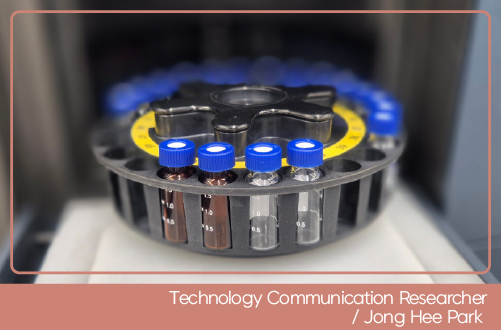
#Amorepacific:log
2026.06.09
0 LIKE
19 VIEW
-
-
- 메일 공유
-
https://dev.stories.amorepacific.com/en/amorepacific-retinol-research-dedicated-to-delivering-it-to-the-very-end
Retinol: Research Dedicated to Delivering It to the Very End
Amorepacific Research Stories Through the Lens of an Ingredient #2
Columnist
Jong Hee Park Research Infrastructure Operations Lab
Editor’s Note
When I was a new researcher, my mentor would tell me to try applying ingredients directly to my skin whenever I had a spare moment. Even an ingredient used in small amounts can be fully felt in a finished product, my mentor would say — and building up that sensory memory by testing ingredients firsthand goes a long way toward making great products. It’s much like how, much like how, when we eat, we can sense the ingredients in a dish, whether their contribution is bold or subtle. So, I’d like to share the story of my favorite ingredients from those days: the ones I looked forward to applying every single day whenever I got a free moment.
#INTRO
In my last column, I wrote about my all-time favorite ingredient. This time, I’d like to talk about an ingredient that drove me to tears: a love-hate relationship with one that has given me no end of trouble. I’m talking about retinol and the retinoid family, ingredients that anyone who has ever worried about wrinkles has likely tried or at least heard of.
Retinoids, Ingredients Notorious for Being Difficult to Work With
You’ve probably heard that retinol belongs to the vitamin A family. Vitamin A-related ingredients broadly fall into two groups: the ‘carotenoids’ and the ‘retinoids.’ Put simply, ‘retinoids’ is the umbrella term for the entire family of vitamin A derivatives, and retinol is the member of that family most widely used in cosmetics.
I have personally worked with three retinoids in product development. The first was retinoic acid (tretinoin, a prescription pharmaceutical ingredient), the one that made me cry during my time developing new drugs for Pacific Pharma. The second was adapalene, a third-generation retinoid used as a prescription acne treatment. The third was retinol, which I worked with while developing a clinic-exclusive acne line.
In those early years of my career, I was developing topical pharmaceuticals — products commonly known as ointments — as well as clinic-exclusive cosmetics. Some of you might wonder why Amorepacific would be developing pharmaceuticals at all. During the years when Pacific Pharma was part of the Amorepacific Group, products sold under the Pacific Pharma name were developed in the pharmaceutical research lab at the Amorepacific R&I Center (formerly the Pacific Technology Research Institute, then the Amorepacific Technology Research Institute). That lab was later renamed the Medical Beauty Research Lab.
All of that said, retinoids are as challenging to work with as they are effective. Retinol and retinoic acid in particular are extremely sensitive to light, heat, and oxygen, and degradation during experiments was rapid. It was not uncommon for a sample made one day to have changed color and lost potency by the next.
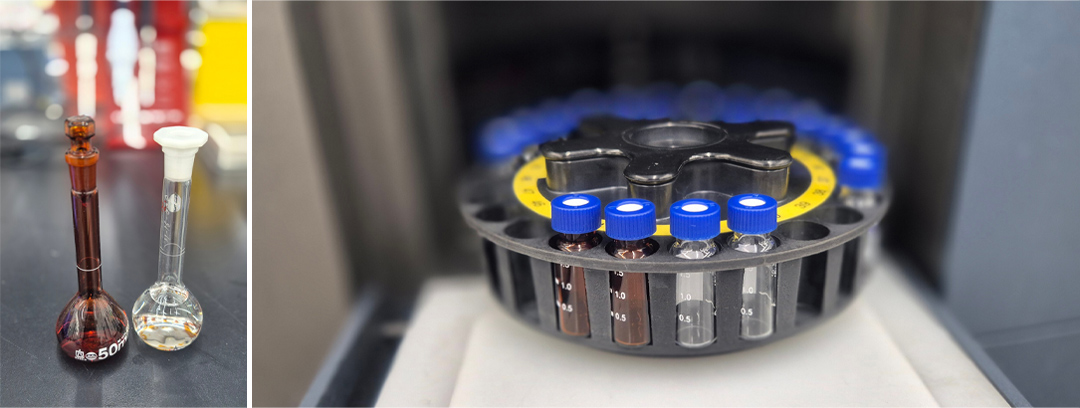
The period when I was developing pharmaceutical-grade retinoic acid was genuinely difficult, even looking back on it now. I stayed in the lab until the early hours of the morning, checking stability, reading through research papers one after another, analyzing overseas pharmaceutical products, and working through dozens of different formulation combinations. Still, the results consistently fell short of expectations. I remember one day when the stability I was targeting seemed perpetually just out of reach, no matter what I tried, and I cried in secret in the lab.
Weighed down by that frustration, I sought out a senior colleague who was doing retinol materials research and opened up about my difficulties. “Retinol is an extremely sensitive ingredient,” my senior colleague told me, “and achieving stability is inherently difficult. Retinoic acid is even more unstable, and in a liquid formulation rather than a cream, of course, it’s going to be harder.” It didn’t solve the problem, but hearing that brought a measure of comfort. I remember thinking: “Oh, it’s not that I’m incapable. This was simply a difficult piece of research.”
From Acne Treatment to Wrinkle-Improving Cosmetics
Retinoid research originally grew out of acne treatment development. If you ever visited a dermatologist for acne during your teenage years, you may have been prescribed a retinoid-based treatment such as retinoic acid (the active pharmaceutical ingredient also known as tretinoin). The observation that retinoic acid, originally developed as an acne treatment, appeared to reduce wrinkles in patients who used it sparked the idea of applying it in cosmetics.
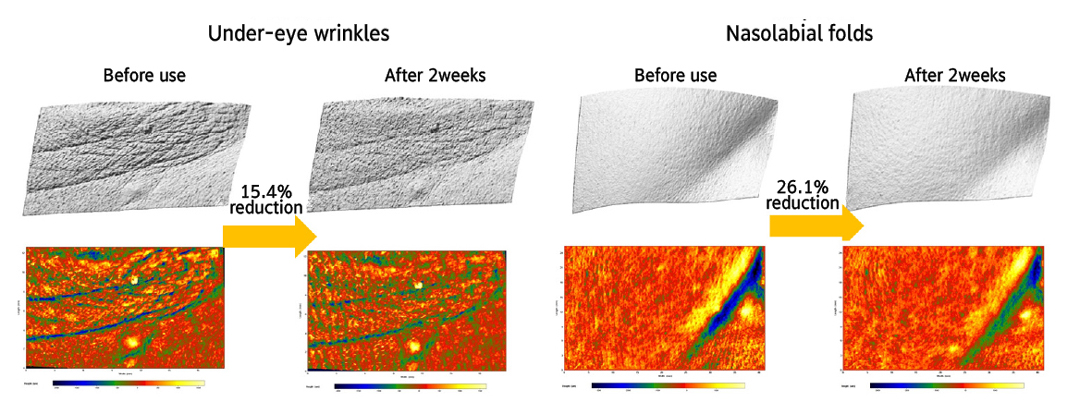
However, retinoic acid carries a high potential for irritation commensurate with its potency, and because it is classified as a pharmaceutical ingredient, it cannot be used in cosmetics. This led to a sustained body of research aimed at harnessing retinol, which can be converted into retinoic acid within the skin, in a form more suited to cosmetic application.
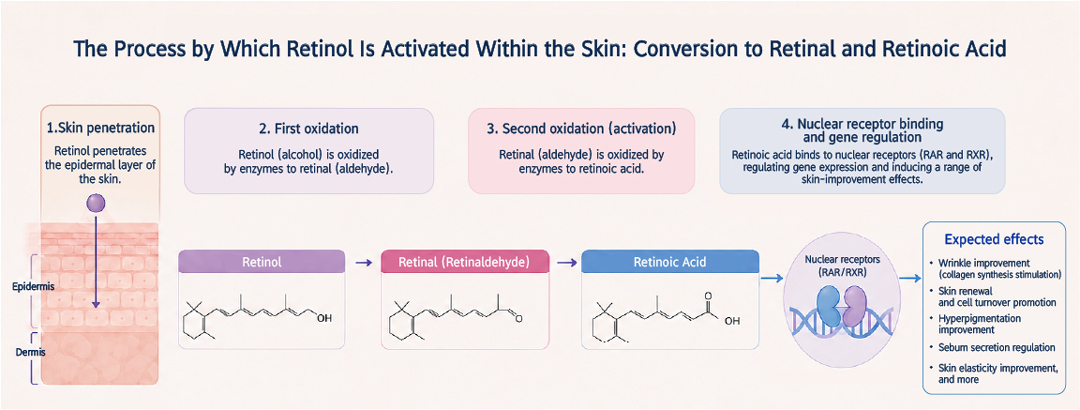
Once absorbed into the skin, retinol is first converted to retinal (retinaldehyde), then to retinoic acid, which participates in skin cell turnover and collagen synthesis. Of these, retinoic acid is closest to the active form that acts directly on skin cells: highly effective, but also relatively high in irritation potential. Retinol, by contrast, involves more conversion steps, making it comparatively well-suited for cosmetic use, and accordingly, research into its benefits for fine lines, skin texture, and elasticity improvement has continued for many years.
Is a Higher Concentration Always Better? The History of Product Development
Given how beneficial retinol is, one might naturally wonder: “Wouldn’t a higher concentration simply be better?” Not necessarily. Because retinol is easily broken down by light and oxygen, and because the potential for irritation also increases as it undergoes conversion to its active form within the skin, what matters in retinol research is not only the concentration used, but also ensuring the necessary amount is delivered reliably all the way to the skin while minimizing unnecessary irritation.
Some may have noticed that relatively high-concentration retinol products are available in the United States and Europe, and wondered why they are less common in Korea. In fact, there have been various attempts in the past to apply high-concentration retinol while reducing skin irritation. However, Asian skin tends to react more sensitively to irritation compared to Western skin. At the same concentration, for example, many users experienced more pronounced redness, dryness, and stinging. Recent retinol research has therefore evolved away from simply increasing concentration and toward balancing efficacy and sensory comfort in ways suited to the skin characteristics of customers in each region.
Amorepacific has a long history in retinol research. In the mid-1990s, as studies demonstrating the efficacy of retinoids in reducing signs of skin aging began to be published in earnest, Amorepacific formed a relationship with Dr. Sewon Kang, who was then at the University of Michigan Medical School, and started researching retinol.
At the time, retinol was highly effective but severely limited by its instability under light and heat, and its tendency to cause skin irritation. Drawing on Dr. Kang’s clinical expertise and technical guidance, Amorepacific pursued research on stabilization technology and, in 1997, launched “IOPE Retinol 2500,” Korea’s first wrinkle-improvement functional cosmetic containing high-concentration retinol.
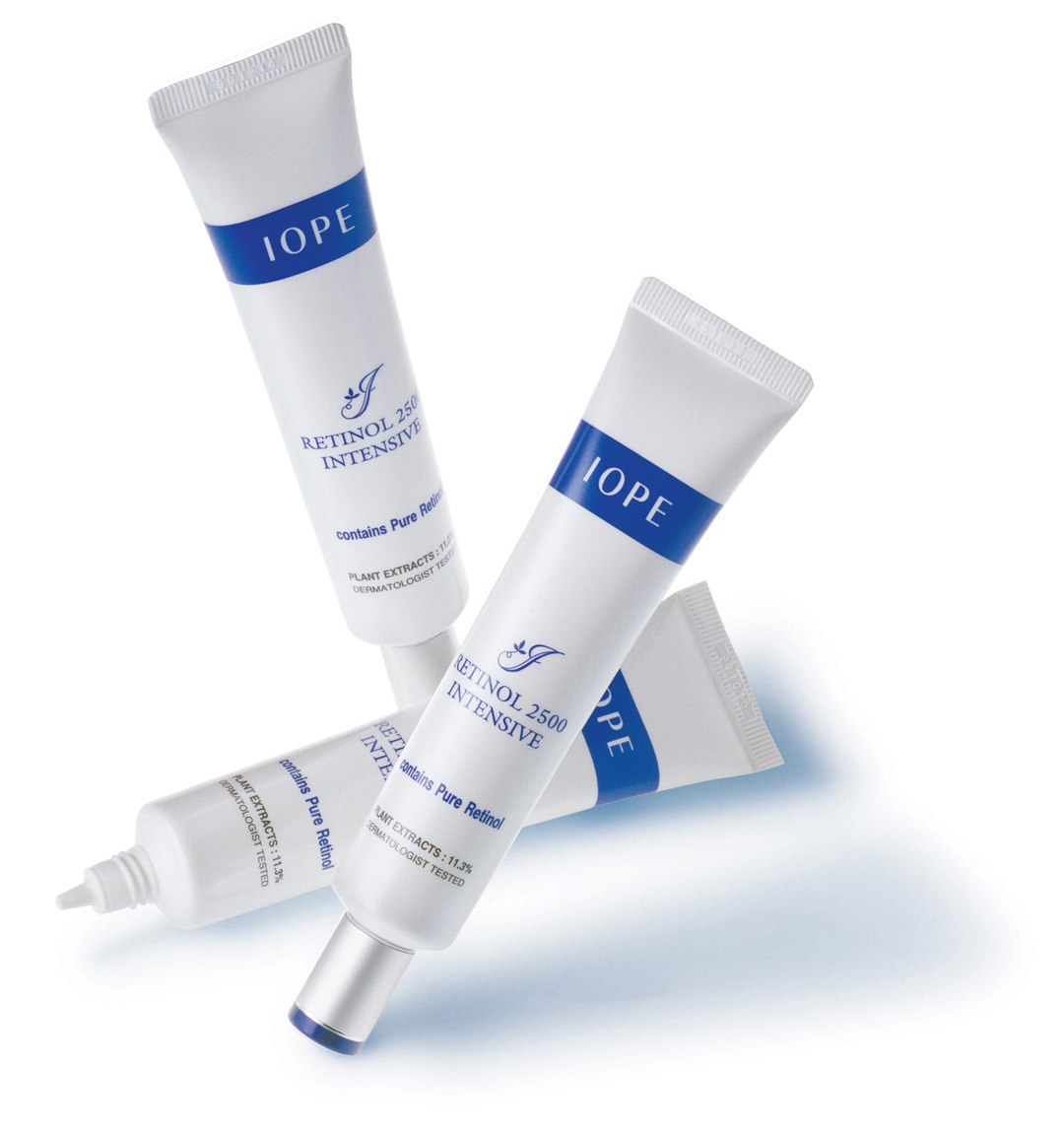
The collaboration did not end with a single product launch. It expanded to encompass research into the skin barrier, skin aging, and medical beauty, and continues to this day through NBRI (New Beauty Research Initiative), a joint research platform with Johns Hopkins School of Medicine, advancing into skin longevity and next-generation epigenetics-based skin research.
Efforts to Deliver It Fully to the Very End
Meanwhile, retinol instability was not a challenge confined to the product development stage. Difficulties persisted in extracting and analyzing retinol from finished products to verify formulation stability and concentration standards. Retinol that had been kept protected from light and oxygen within a stable formulation within a product begins to degrade rapidly the moment it is removed for analysis. In practice, losses of 10% or more over the course of a roughly ten-hour analytical run were not uncommon. We used to joke about it, saying the ingredient must really dislike us and was making a run for it every chance it got.
Retinol’s path has not always been smooth. As the legal standards governing concentration requirements and manufacturing controls for retinol-functional cosmetics grew increasingly stringent, securing stability once again became a major hurdle. For a time, I wondered whether it might no longer be feasible to produce retinol functional products at all.
But in the end, some colleagues found a way to do the very thing that seemed impossible. Formulation researchers continuously refined their formulas to improve stability; a new system was developed to minimize oxygen exposure during manufacturing and filling; and the packaging team created a dedicated light-blocking, airless specialty container designed to block light and oxygen as effectively as possible. Their organizational roles and responsibilities were all different, but they shared a single goal: to deliver retinol to customers in a stable state. With the efforts of researchers, the production floor, and the packaging team converging on that one aim, retinol was able to reach customers again in a product far more stable than before.
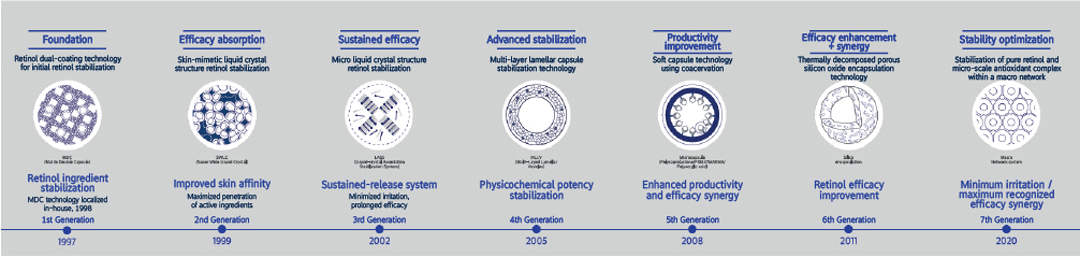
Incorporating retinol into a cosmetic product is not, in itself, an extraordinarily difficult task. Maintaining a stable retinol concentration throughout the period a customer uses a product, however, and delivering that retinol to the skin at a level where efficacy can be expected right through to the last drop: that is an entirely different matter. The reason Amorepacific has devoted more than 30 years to retinol stabilization technology, ever since introducing Korea’s first retinol wrinkle-improvement functional cosmetic, “IOPE Retinol 2500,” ultimately comes down to one thing: the trust it has always sought to earn from its customers. The goal was to protect the efficacy and quality that customers could rely on, not only when they first opened a product, but all the way to the very end.
Where early efforts focused on simply incorporating retinol into a cosmetic in a stable form, research has since evolved to reduce skin irritation and improve absorption efficiency. As mentioned earlier, this has meant bringing in not only formulation expertise but also manufacturing equipment and oxygen-barrier packaging, marshaling every available resource to ensure that retinol’s benefits reach the customer to the very last use.
This long-standing retinol research has also earned meaningful recognition outside the company. Amorepacific’s pure retinol stabilization technology — its seventh-generation technology — received the Minister’s Award at the Korea Technology Awards in 2022 and the IR52 Jang Young Sil Award in 2024. This recognition was not simply for developing a new ingredient, but for the technological capability to keep unstable retinol stable and deliver it reliably to customers until the very last use, while supporting visible skin benefits for actual product users.

#OUTRO
In academic circles, a natural question has also emerged: “Is it possible to go beyond topical application and manage the skin’s internal environment as well?” Amorepacific has explored various possibilities in skin health and efficacy, including research on inner beauty. In practice, the development of functional health foods utilizing vitamin A-derived ingredients also involved evaluating skin-related efficacy outcomes — an attempt to see skin in a more multidimensional way, going beyond the simple question of what to apply.
Retinol remains a demanding ingredient. High-concentration products are generally best used in the evening, and for first-time users or on days when the skin is sensitive, they can produce a mild stinging sensation. Even so, the reason so many people continue to reach for retinol is that it is an ingredient that genuinely delivers on the promise of visible change.
The ingredient that caused me so much grief in my pursuit of stability has, somewhat ironically, become the longest-surviving resident of my skincare shelf, an essential part of my nightly skincare routine.
 |
Jong Hee Park |
|
|
Amorepacific
 |
|
-
Like
0 -
Recommend
0 -
Thumbs up
0 -
Supporting
0 -
Want follow-up article
0

Array
(
)