




#Amorepacific:log
2026.05.15
0 LIKE
13 VIEW
-
-
- 메일 공유
-
https://dev.stories.amorepacific.com/en/amorepacific-do-you-know-romance-cliches
Do You Know Romance Clichés?
What Good Is the Age of AI Without People? #1
Columnist
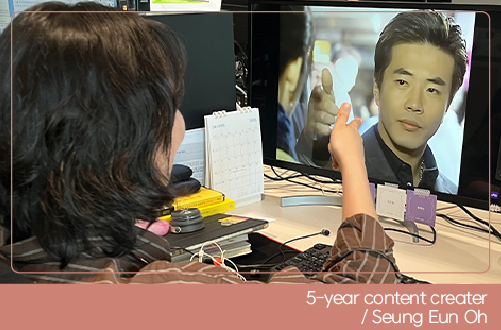
Seung Eun Oh Amorepacific Foundation
Editor's Note
At the Amorepacific Foundation, we create content that examines our lives through the lens of 'academic research,' particularly in the humanities. Look closely, and even decades-old scholarship connects to questions we face today. I'll make the humanities accessible: a closer look at ourselves and the world around us.
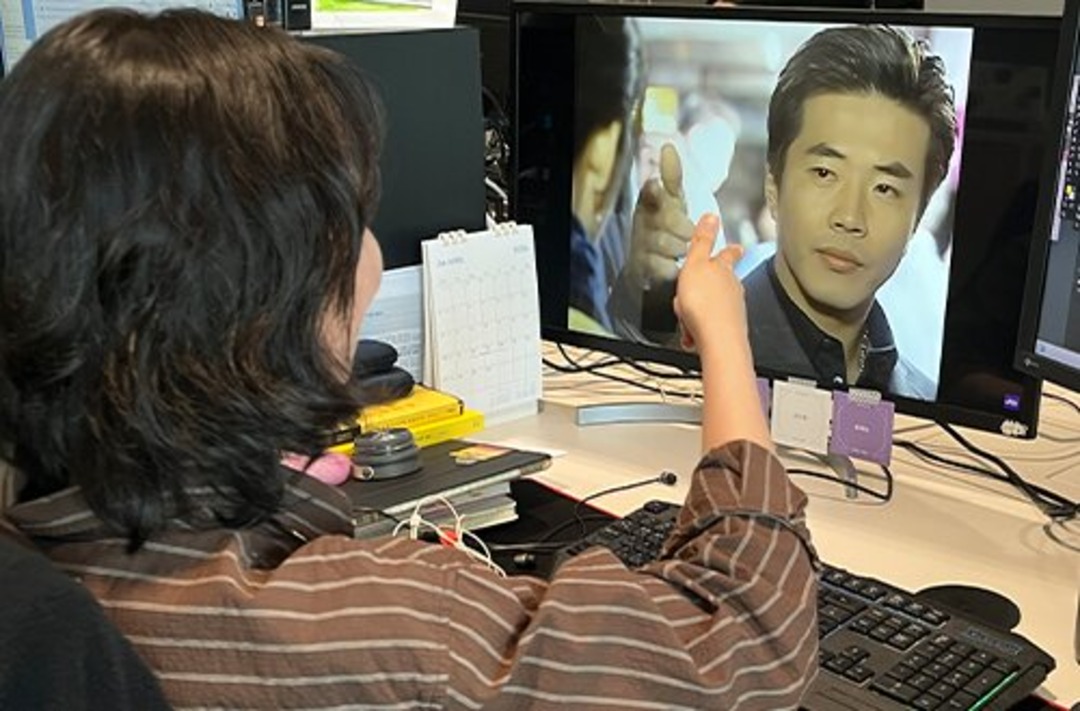
Have you all watched the drama Perfect Crown? A constitutional monarchy setting in a K-drama. We haven't seen that in a while. The pioneer was Princess Hours, of course. Its iconic soundtrack 'Perhaps Love' still sounds fresh today, but it's hard to believe that Princess Hours aired in 2006, already twenty years ago…! With time, the range of romance dramas has expanded considerably.
Romance dramas used to be dominated by what's often called the "heir to a chaebol(a large Korean conglomerate) meets struggling girl living in a rooftop room" formula: the female lead falls for a wealthy male lead far above her station, gets doused with water by the prospective mother-in-law, weathers the jealousy of rivals, survives a bout of amnesia… She's knocked down repeatedly, but love prevails in the end. It may sound predictable, but there's more to it than simple cliché: these stories tap into the power of 'Psychological Reactance.'
Psychological Reactance
A psychological phenomenon in which, when a freedom is restricted or forbidden, we rebel against the restriction and desire the forbidden thing even more intensely, driven by the urge to reclaim that freedom.
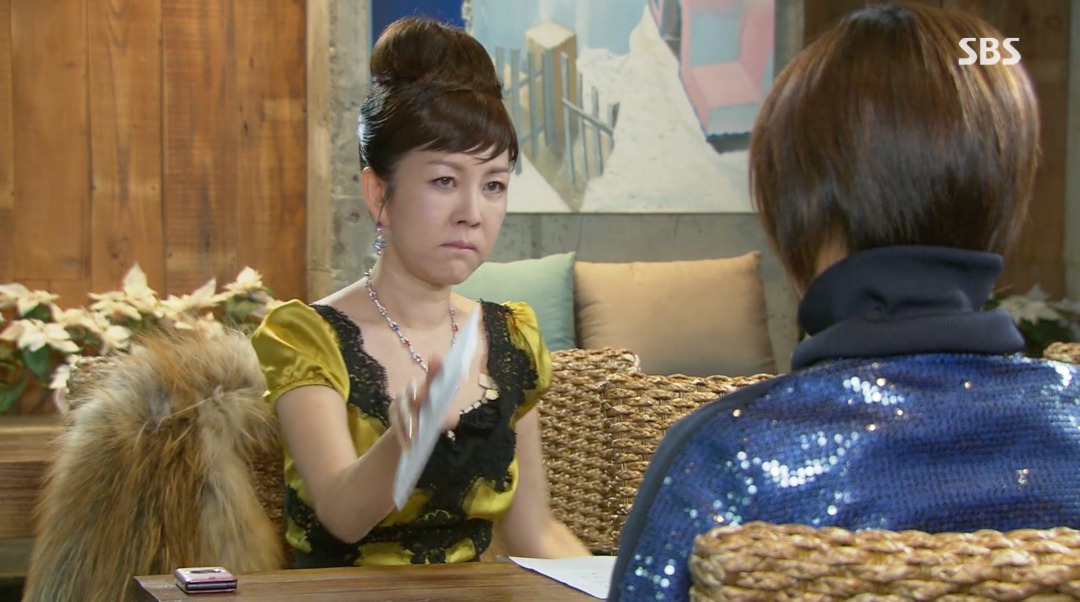
<Source: SBS <Secret Garden>, Episode 8>
Applied to romance, this means: the more obstacles stand in the way of love, the more desperately we want it. By this logic, the scene where the male lead's mother thrusts a wad of cash and demands, "Take this money and leave my son!" would have had the opposite effect of what she intended, making the couple's love all the more unshakeable.
Today's romance dramas tell a somewhat different story, don't they? Characters have become more self-directed, and the stories tend to focus less on the gap between the leads and more on the texture of their relationship and the subtle shifts in their emotions. In Perfect Crown, the female lead, Hee-joo Seong (IU), a chaebol heir born out of wedlock, actively pursues marriage to Grand Prince Ian (Woo Seok Byeon) on her own terms. And Yumi's Cells Season 3 takes this further, literally personifying each character's emotions and thoughts to put the spotlight on the inner worlds and contrasting mindsets of its leads.
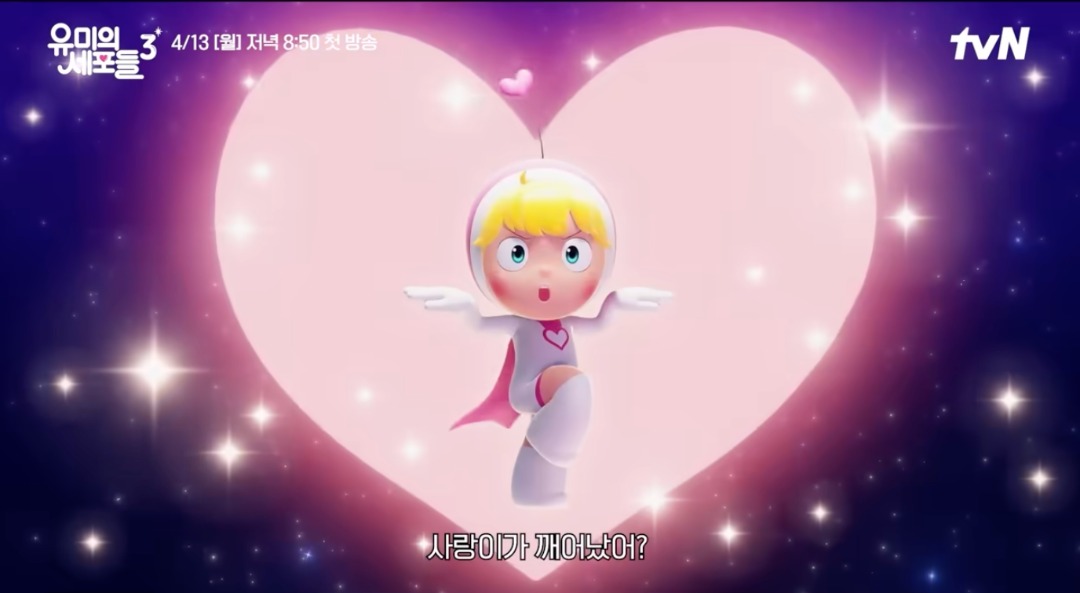
<Source: tvN DRAMA YouTube — Yumi's Cells Season 3 Teaser (feat. Yumi's Love Cell)>
This shift reflects less a change in how people love and more a refinement in the kinds of barriers that stand in love's way. What drives a romance story forward is precisely these barriers: the defining 'differences' between the two leads. Those differences can be wealth or social standing, as in dramas of old, or they can be race, culture, gender, or even time and death.
Love That Transcends Gender
"I like you. Whether you're a man or an alien, I don't care anymore." — from The 1st Shop of Coffee Prince
Love That Transcends Time and Death
"That's right. You're going to die. You actually die. I'm the only one in the world who knows that, and I can't even tell you. But I still want to protect you. I have to keep you alive. So I'll do whatever it takes." — from Lovely Runner
Where once the visible, external differences — wealth, social class — took center stage, romance stories now explore the personal, invisible kind: differences in mindset, temperament, and the way each person sees the world. This mirrors a broader cultural shift that came with the rise of MBTI culture, moving us from "Why on earth would someone think that way?" to "Oh, so that's how some people's minds work." And these small differences really do reshape relationships in remarkable ways.
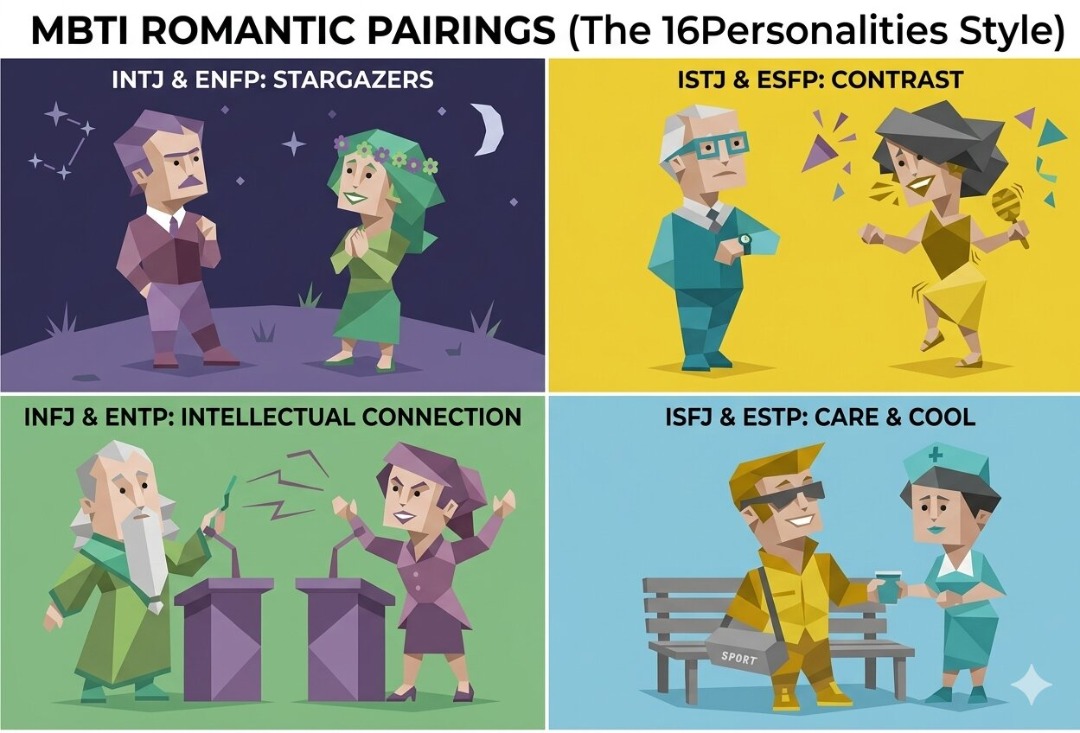
<Source: AI-generated image>
Maybe that's why, lately, I sometimes find love difficult, not because of any dramatic obstacle like in those old dramas, but simply because conversations with my partner can feel a little off. I tend to lead with emotion and context; my partner leads with facts and problem-solving. It's the classic MBTI gap between NF (Intuition + Feeling) and ST (Sensing + Thinking).
It's not that one of us is right and the other wrong; we make sense of the world differently. Still, every time I feel that gap, I find myself quietly closing off (lol). The good news is that we work through it each time. Recently, my partner put together a PowerPoint presentation outlining his perspective, my perspective, and the changes he planned to make going forward. "So when I say it like that, that's how it feels to you. Got it. Here's what I'll do differently." Taking that one small step toward each other, being honest and open, made me realize that what matters most, in the end, is respect and communication.
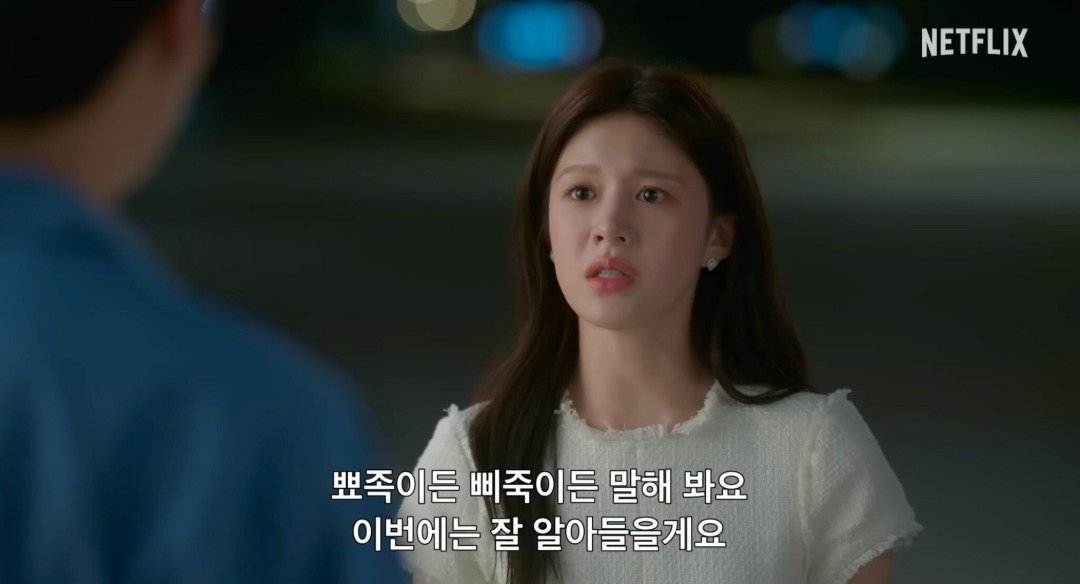
<Source: Netflix Korea YouTube — Can This Love Be Translated? Main Teaser>
Gary Chapman describes five Love Languages.
1) Words of Affirmation: expressing praise and encouragement to your partner
2) Quality Time: being fully present together: genuine conversation, shared hobbies, and more
3) Receiving Gifts: offering a symbol of love, regardless of monetary value
4) Acts of Service: meeting your partner's needs through action
5) Physical Touch: deepening connection through physical contact
Everyone expresses and receives love differently. Some feel loved through Words of Affirmation; others express it through Gifts. Just as communicating with someone from another culture means learning their language, truly connecting with a partner means making the effort to understand and respect the Love Language they speak.
"Do you know how many languages exist in the world?"
"More than 7,100, I believe."
"Wrong. There are as many as there are people. Everyone speaks their own language. That's why we misunderstand each other, hear the opposite of what's said, and end up saying things we don't mean."
— from Can This Love Be Translated?, Netflix Drama
What barriers and obstacles does your love face? Like the leads of a romance drama who find a way to love despite everything — why not start with an honest conversation? Try learning each other's language, and give yourselves a little more room to understand your differences.
*This content is also available as a video on the Amorepacific Foundation Instagram.
*This column draws on “역경을 딛고 사랑하는 사람(A Person Who Loves Through Adversity)”, a chapter in 아름다운 사람(Beautiful People), published through the Asia Beauty Expedition project with research support from the Amorepacific Foundation.
 |
Seung Eun Oh |
|
|
Amorepacific Foundation
A collector of experiences and knowledge who makes content
 |
|
-
Like
0 -
Recommend
0 -
Thumbs up
0 -
Supporting
0 -
Want follow-up article
0
Array
(
)