




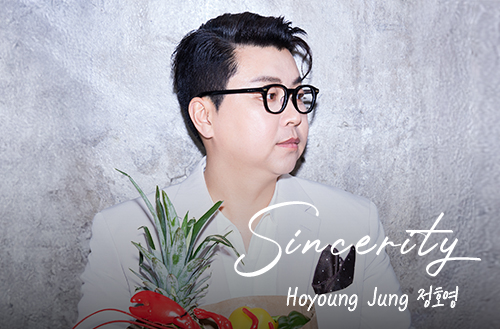
#NEW BEAUTY ICON
2026.04.06
0 LIKE
57 VIEW
-
-
- 메일 공유
-
https://dev.stories.amorepacific.com/en/amorepacific-encountering-chef-hoyoung-jungs-new-beauty
Encountering Chef Hoyoung Jung’s New Beauty
A Chef Who Cooks with Heart and Stays True to What Matters Most
The ‘New Beauty Icon’ series introduces individuals who inspire the world through their unique beauty. This edition’s featured icon is Chef Hoyoung Jung, a chef who has woven Japanese cuisine into the everyday fabric of people’s lives. Best known to many as a TV personality and YouTuber, Chef Hoyoung Jung is, as he demonstrated on Culinary Class Wars Season 2, a true master of Japanese cuisine. For Jung, the essence of cooking is an exchange of sincerity: you pour your heart into the dish, and that warmth reaches whoever receives it. After studying at a culinary school in Japan, he chose “udon” as his specialty for that very reason: it was a way to bring the taste of genuine care to as many people as possible. With 27 years of cooking behind him, and determined to keep going strong for many more, Chef Hoyoung Jung has made longevity a guiding principle of his life. This is the story of a chef who embodies a beauty uniquely his own, in the kitchen and in everything beyond it.
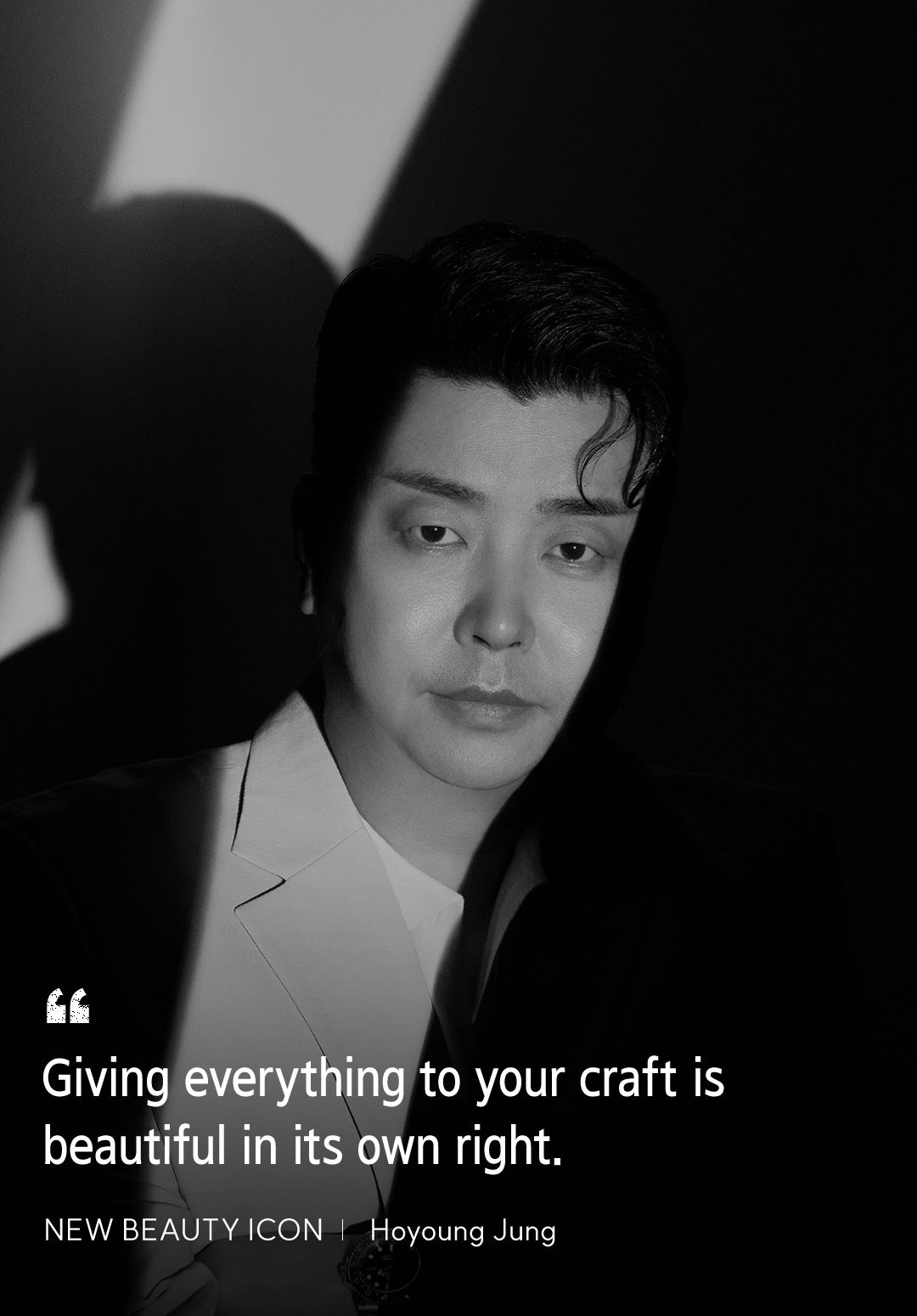
Hello, Chef Hoyoung Jung! Would you introduce yourself to our AMOREPACIFIC STORIES readers?
Hello, everyone. I’m Hoyoung Jung, a Japanese cuisine chef. Thank you so much for calling me a New Beauty Icon. I’ve always thought of myself as someone with little real connection to the world of beauty, so it’s truly an honor to be invited to speak about the kind of beauty Amorepacific champions, beauty that is uniquely your own. I hope today’s photo shoot gives you a glimpse of a different kind of beauty, too.
What does beauty that is uniquely your own mean to you?
I think beauty is simply giving your absolute best in whatever field you’re in. For me, as a chef, that moment is when I’m at the stove, cooking.
We’d love to know how you work to stay true to your vision as a chef.
Cooking is a profession that calls for genuine gratitude toward the people you’re feeding, so I always try to keep the person on the receiving end in mind and stay focused on the essence of cooking. I truly believe that when you cook with that person in your heart, the food tastes its best. And I think that’s when I’m at my most beautiful as a chef, too.
Culinary Class Wars Season 2 caused quite a stir when it aired recently. You competed this season and really got to show the world what you’re made of. Did the pressure of competing in a survival format give you pause?
I’d be lying if I said I wasn’t nervous. In fact, the reason I turned down the invitation for the previous season was precisely the fear of being eliminated. In a survival competition, skill matters, but so does luck; there are just too many variables at play, and that weighed on me. Then I watched Season 1, and something shifted. The show captured its chefs cooking with genuine sincerity. I thought, even if luck isn’t on my side and I get cut, people will at least see me cook the way I actually cook. That’s what made me say yes to Season 2. I’d always wanted to show the people who only knew me as a TV personality what I really am: a Japanese-cuisine chef through and through.
Given how hard-won that decision was, I imagine you went in with a solid game plan. Did you have a survival strategy of your own?
I expected real strategizing to be difficult, given that the two judges have completely different palates. One comes from a fine dining background, and the other has a strong feel for what the general public loves, so my only real ground rule was: don’t lean too hard in either direction. Beyond that, I just told myself to mesh well with my team during the group rounds and to simply make myself useful.
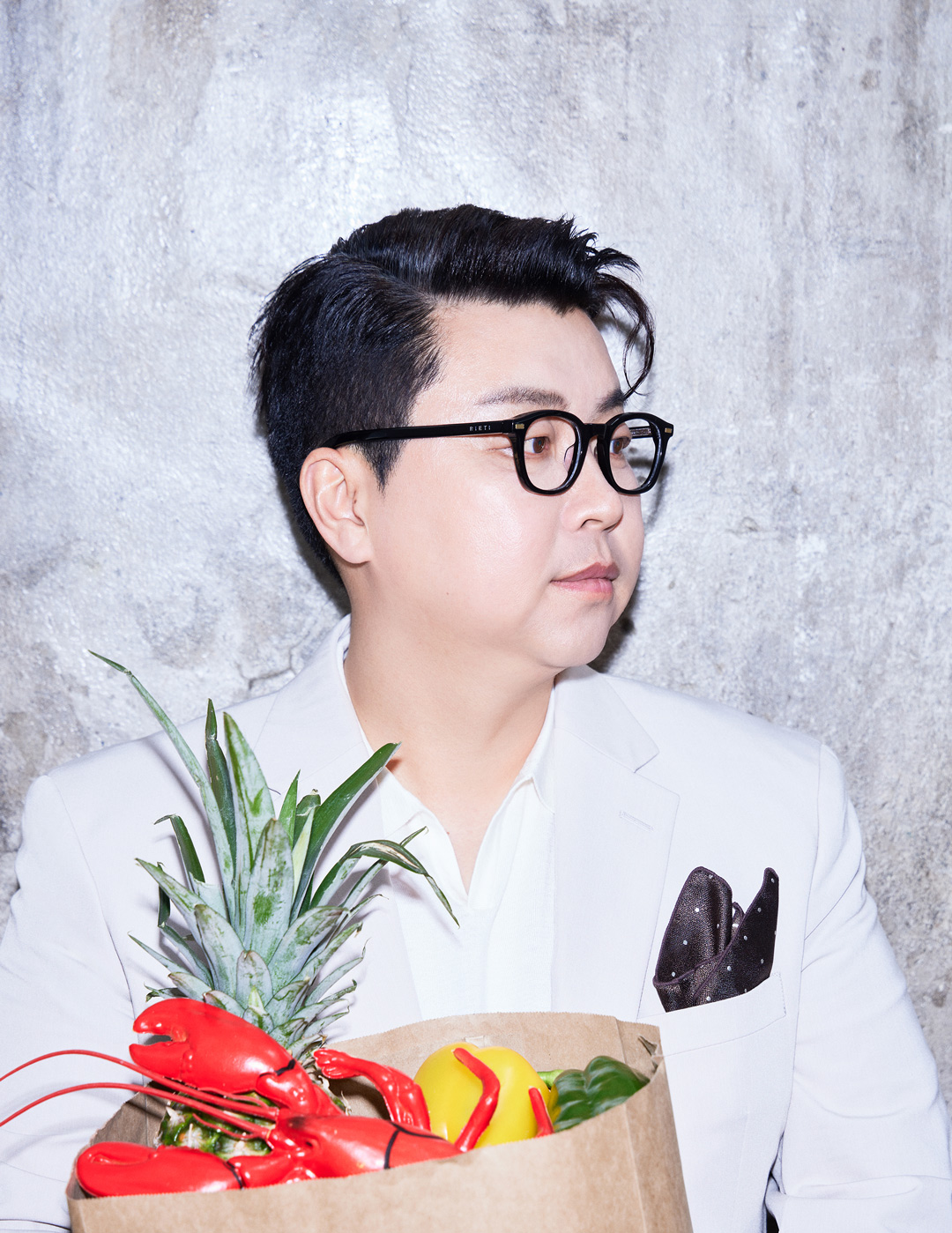
Is there a moment from your Culinary Class Wars Season 2 run that you feel was the most authentically you?
The monkfish round, without a doubt. On screen, it looked like I was improvising on the spot, but I actually had about two weeks to prepare. I spent that whole time thinking hard about how to approach monkfish as an ingredient. It has such a distinctive texture that I really wanted to find a way to make the most of it. Then one day it hit me: I was suddenly taken back to my days in Japan, learning how to break down fish. I used to work without pay at a fishmonger in Osaka that dealt exclusively in wild-caught fish and supplied some of the city’s finest restaurants. I thought: go back to that beginner’s mindset, and start from the very beginning — show the whole process, from the breakdown up. I built a hanging rig and started practicing, and as I did, all those early memories of learning to fillet fish came rushing back. That was where it all began for me, and everything since has grown from that point. That’s why I think the monkfish round was the one that showed the most of who I truly am.
Were there any moments during the competition that you found difficult?
In the black and white team rounds, Rounds 1 and 2 went fairly smoothly, but Round 3 was brutally tough. In Round 1, with 100 judges in the room, I figured the sheer numbers meant we had to go broad: appeal to popular taste, full stop. For Round 2, I argued the opposite: go traditional, go refined. With a smaller panel, I felt the judges would be evaluating from a more discerning, gourmet perspective. That instinct proved right. But what I never saw coming was eight established chefs walking in for the final round. We were very nearly overtaken in what came down to a razor-thin finish, and we did pull through in the end, but I was absolutely drenched in cold sweat.
What was the single most memorable moment for you?
There was a moment when Chef Sam Kim, who had been on my team, became my head-to-head opponent. Sam Kim and I are very close now, but at that point, we were still keeping things polite and professional between us. I already knew how deeply he cares about cooking, so from the start, I’d been hoping we’d end up on the same team if teams were formed. We did — and then immediately had to go head-to-head. I was completely thrown off. That was the hardest moment for me, and the one I remember most.
After all that, you finished in a remarkable fourth place on Culinary Class Wars Season 2. Has anything changed since the show aired?
I’ve been cooking for 27 years now, and while people knew I was a chef, most had no real sense of how long I’d been at it, or what kind of cooking I actually do. But watching me handle whole fish on camera, working through Japanese cuisine dish after dish — I think something finally clicked for people: this is Hoyoung Jung, the Japanese cuisine chef. I’m genuinely thrilled that so many people have finally gotten to see who I really am.
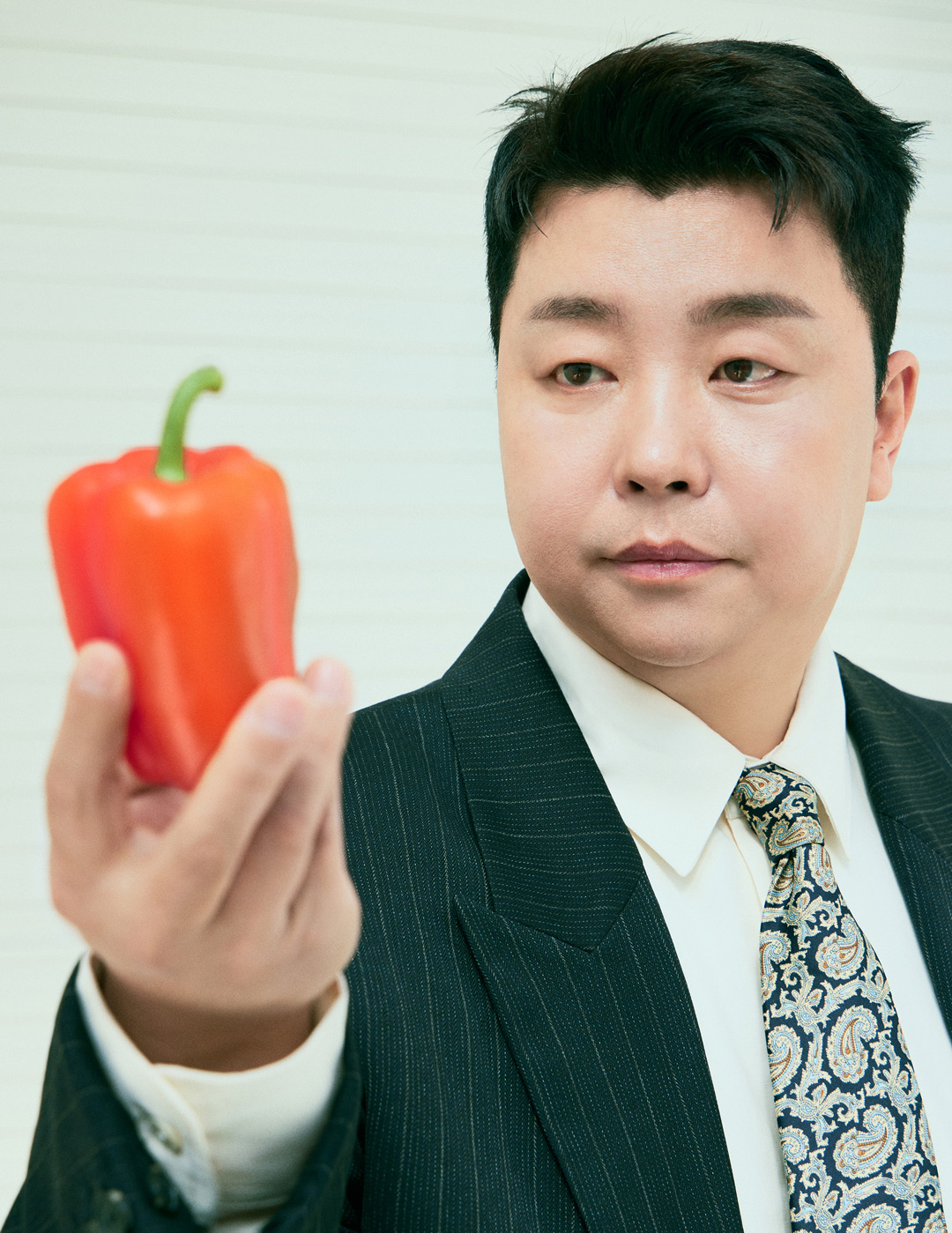
You’ve been cooking for 27 years. What mindset do you bring to the kitchen?
One of the most important things in cooking, I believe, is the feeling you have toward the person who will eat what you make. The same dish can taste completely different depending on the state of mind you’re in when you prepare it. When you cook for someone in a warm, happy spirit, the food tastes better. My mentor, Chef Hyoju Ahn of Sushi Hyo, once said something that has never left me: “When I’m angry, I don’t slice the fish.” His point was that an angry heart seeps right into the sashimi. I carry those words with me every day.
So your attitude toward cooking matters just as much as your skill.
Absolutely. Working in a restaurant, you inevitably get tired and worn down. I run both a udon restaurant and an izakaya, and I always tell the people I work with: if 500 guests come through the door, we make 500 bowls of udon, but each guest has come for just one bowl. Don’t think of it as making five hundred bowls. Think of each of those five hundred people, and make every single bowl for that one person, with sincerity.
That must be why your udon has such a following. Was there a particular reason you chose udon as your signature?
During my time studying abroad, I was living pretty lean. After a long day of work, I’d look for something that could fill me up for under a thousand yen. Udon was exactly in that range. What kept drawing me back was the variety — every day I could taste something a little different. I’d hop on my bike and wind through alley after alley, neighborhood after neighborhood, just eating my way through udon shops. Sure, I was there to study cooking, and in an ideal world, I’d have been eating course meals at fine restaurants, but on my budget at the time, udon alone gave me an enormous education. Udon noodles are like a canvas: what you add to them changes everything. Our menu alone runs to over twenty variations. I became captivated by that kind of endless versatility, and then there’s the accessibility of it. It’s food that can genuinely satisfy anyone’s hunger, and beautifully. That’s what I love about it.
Out of those twenty-plus menu items, is there one you’d personally steer people toward?
I’d start with the warm kake udon with tempura. Getting the fundamentals right is what makes everything else work, so we put a lot of thought into the basics: the broth, the noodles themselves. Try the simplest version first, and I think you’ll see just how much is going on even without the extras. What’s funny is that even though we’re a udon restaurant, we’re actually busier in summer. Our bukkake udon, chilled noodles finished with a cold dipping sauce, is hugely popular. That chewy, springy texture with a cool, bracing sauce is a combination people just keep coming back for. So once the heat sets in, that’s my recommendation too. But honestly, the best thing you can do is come back a few times and work your way through the menu. That’s where you’ll really find what makes udon so special.
Have you faced setbacks or moments of real discouragement along the way?
Of course. When I was starting out, I worked 16 hours a day with only 2 days off a month. The pay was low, and the hours were brutal. With no time to call my own, I’d wonder, vaguely, whether I’d ever actually make it as a chef. But I kept going, because cooking was still the thing I enjoyed most. Before cooking, I’d dabbled in this and that, and nothing stuck. I’d lose interest quickly and couldn’t see myself staying with any of it. Cooking was different. Even when it was hard, I wanted to keep going. I stuck it out for about five years like that before I went abroad to study.
What kept you going through those difficult periods?
It changed depending on where I was in life. Before I got married, it was my mother. She ran a restaurant and raised us, kids, largely on her own. It was no easy road. The thought of doing right by her was what carried me through the hard times. After I got married, my wife took on a great deal. We met while I was studying abroad, and since then, she has supported my cooking career every step of the way, right through to where I am today. Reminding myself that the people closest to me were in it with me, that I wasn’t carrying it alone, is what kept me moving forward.
You got married while you were studying abroad? So you were falling in love in the middle of all that difficulty. (Laughs)
(Laughs) I think the hardship made us lean on each other. She was majoring in Japanese culture, and I was studying cooking; we met at a language school. And here we are.
We’d also love to know why you chose Japanese cuisine specifically.
The first place I ever worked was my mother’s restaurant. She ran it for forty years, and I worked alongside her. Eventually, I decided I wanted to learn cooking properly, so I started thinking about studying abroad. I went back and forth between Chinese cuisine and Japanese cuisine; both had real appeal. I did my research, visited different places, and somewhere along the way, something just clicked: the image of standing behind a counter, knife in hand, shaping sushi. It looked exactly where I wanted to be. So I went to Japan, and I’ve been on this path ever since.
Twenty-seven years is most of a working life spent doing one thing. Do you have any hobbies outside of cooking?
Honestly, I never really had one. More recently, I’ve taken up running, and it’s starting to feel like a genuine hobby. My stamina has improved noticeably since I started, and I think that’s a big part of why I was able to get through Culinary Class Wars without hitting a wall. When shoots run long, your concentration is the first thing to go, so physical endurance matters enormously. I ran 5 km this morning before coming in.
And you’ve been shooting since early this morning. That’s impressive. It sounds like longevity is something you’re actively living out.
It’s a word people are talking about a lot these days, and yes, I do want to keep living well and sustaining what I do for as long as possible. I also believe that a healthy body is what makes healthy cooking possible. People joke with me all the time: “You’re running, so why aren’t you losing weight?” (Laughs) But I’m not running to lose weight. I run because I want to maintain a healthy daily life. People do sometimes suggest I try diet supplements to slim down, but I’ve heard those can dull your appetite, and that’s a problem I can’t afford. What chef can afford to lose his appetite? Running does make me hungry, which is its own challenge — but on the other hand, it sharpens my palate, and that’s a real benefit. I used to feel guilty eating, always worrying about my health. But now I just think: I’ll run tomorrow. It’s a much better way to live.
Your YouTube channel has over 610,000 subscribers, and you share your recipes openly and freely. Doesn’t it worry you to give away your trade secrets?
Some of what I share is identical to what we use in the restaurant, and some of it is genuinely my own know-how. I put it out there because I hope it’s useful to people running their own small businesses or studying to become cooks. Cooking is something you only fall in love with once you experience success at it. When it’s approachable and fun, and what comes out actually tastes good, you want to keep doing it. The more people get excited about cooking, the more they’ll seek out restaurants to try new things, and that can only help dining culture grow. Keeping it to myself won’t make me rich, and I’d rather share what I can and watch it grow in a way that benefits everyone. Not an ounce of worry. Take whatever you need.
That’s a beautiful way to look at it. Is there anyone you’ve encountered recently who you feel embodies their own kind of beauty?
All chefs are beautiful, really. Actually, anyone who gives everything to what they do is beautiful; I only mentioned chefs because that’s the world I live in. But if I had to name just one person right now, it would be Sam Kim. Among ourselves, we call him “the chef who’s crazy about cooking.” That’s just what he is. Except on days when he has a shoot, he’s always at his restaurant, commuting alongside his staff, not cutting a single corner. When I think about beauty that is uniquely your own, Sam Kim is the first person who comes to mind.
When do you feel most like yourself?
When I’m cooking. At my Jeju location, I work straight through from ten in the morning until six in the evening without stopping. My main job there is boiling the noodles, and it’s more critical than it sounds. Fresh noodles take about three minutes to cook, and if you’re even ten seconds late pulling them, the texture changes and the cooking water clouds over, which affects everything that follows. It’s precise, unforgiving work. But at the end of a full day of cooking noodlesto that perfect springy bite, I’m exhausted and completely at peace. There’s a feeling of “I did my work.” The work that is mine to do.
Finally, do you have any plans for keeping that beauty that is uniquely your own alive going forward?
One concrete goal is to run a full marathon. I figure if I keep at it consistently, the weight will come down naturally and I’ll build the kind of deep physical foundation that makes me a better cook. The plan is to build that fitness, keep studying cooking seriously, keep eating widely, and keep working toward making things taste better. I also want to keep pushing with the TV work and YouTube. I teach my culinary students to always look to the essence of things first, and I want to be someone who never loses sight of that essence myself.
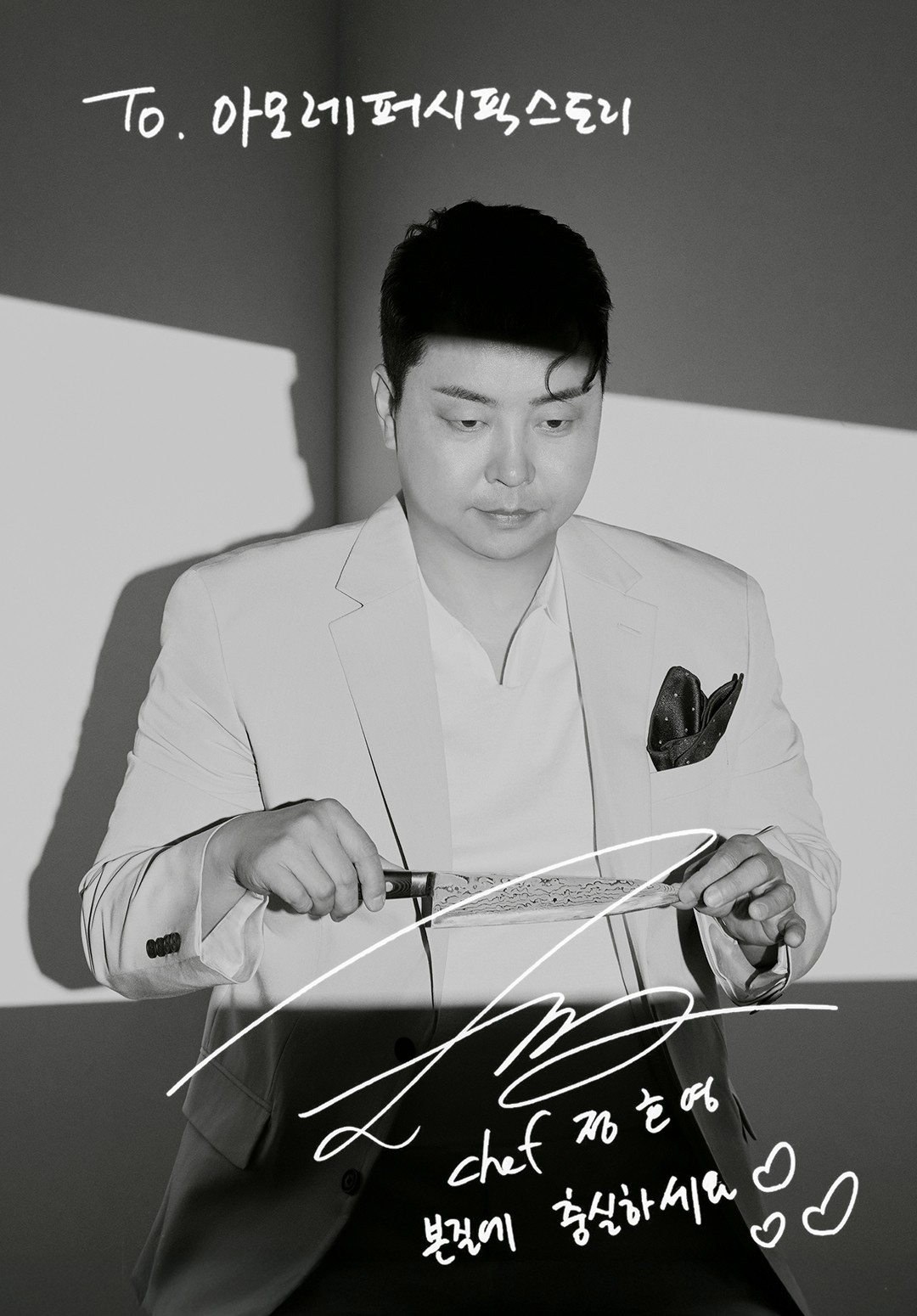
In the ‘New Beauty Icon’ series, we meet individuals who inspire the world and explore ‘their own beauty’ they’ve discovered in their lives.
-
Like
0 -
Recommend
0 -
Thumbs up
0 -
Supporting
0 -
Want follow-up article
0
Array
(
)